

One of the most common questions collectors face when designing a display is surprisingly simple:
How many cards should be displayed in a frame?
There is no universal answer. The ideal display depends on the collection, the available space and the story the collector wants to tell.
Some displays focus on a single centrepiece card, while others showcase complete sets, favourite players or years of collecting.
Understanding the strengths of different display layouts can help collectors create a presentation that feels balanced, organised and visually impactful.
Start With the Purpose of the Display
Before choosing a layout, it helps to ask a simple question:
What is the display trying to showcase?
Some collectors want to highlight a single card.
Others want to display a collection, a set or a theme.
The answer often determines how many cards belong in the display.
Single Card Displays
A single-card display places all attention on one card.
This format is often used for:
- Favourite cards.
- Rare cards.
- Signed cards.
- High-grade slabs.
- Significant collection pieces.
Single-card displays create maximum focus and are often ideal for centrepiece items.
Best For
- Showcase cards.
- Investment cards.
- Sentimental favourites.
- Signature pieces.
Two to Four Card Displays
Smaller multi-card layouts provide a balance between focus and variety.
Collectors often use these displays to showcase:
- Card pairings.
- Before-and-after grading results.
- Favourite Pokémon.
- Key players from a sports team.
- Small themed collections.
This format allows multiple cards to be displayed without feeling crowded.
Best For
- Small collections.
- Feature groupings.
- Desk and office displays.
Five to Nine Card Displays
Nine-card displays are among the most popular collector layouts.
They provide enough space to showcase a meaningful collection while remaining compact and visually balanced.
Collectors commonly use this format for:
- Pokémon evolution lines.
- Favourite player collections.
- Team displays.
- Graded card showcases.
- Mini sets.
Nine-card displays often create a strong visual impact while remaining easy to display on a wall.
Best For
- PSA slabs.
- One Touch holders.
- Collection highlights.
- Themed displays.
Ten to Sixteen Card Displays
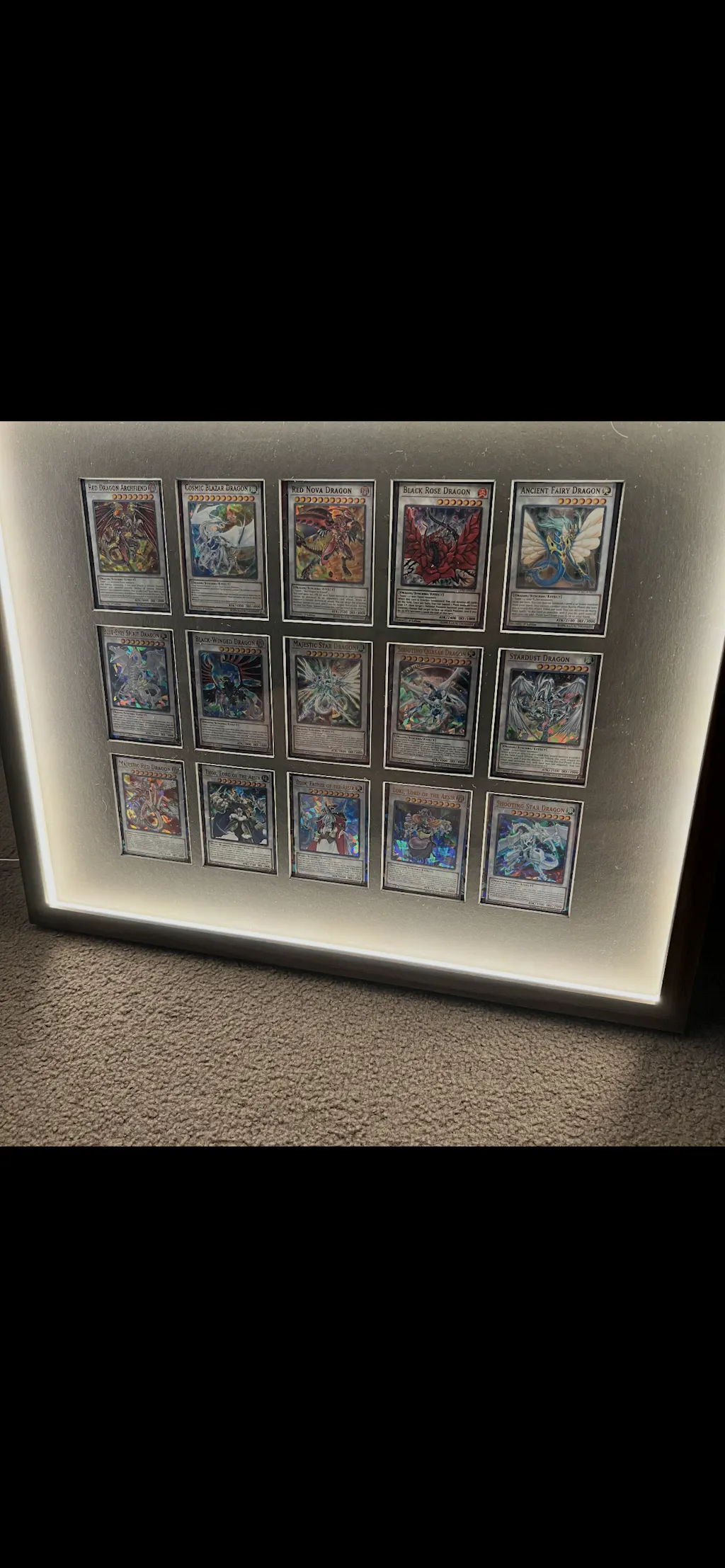
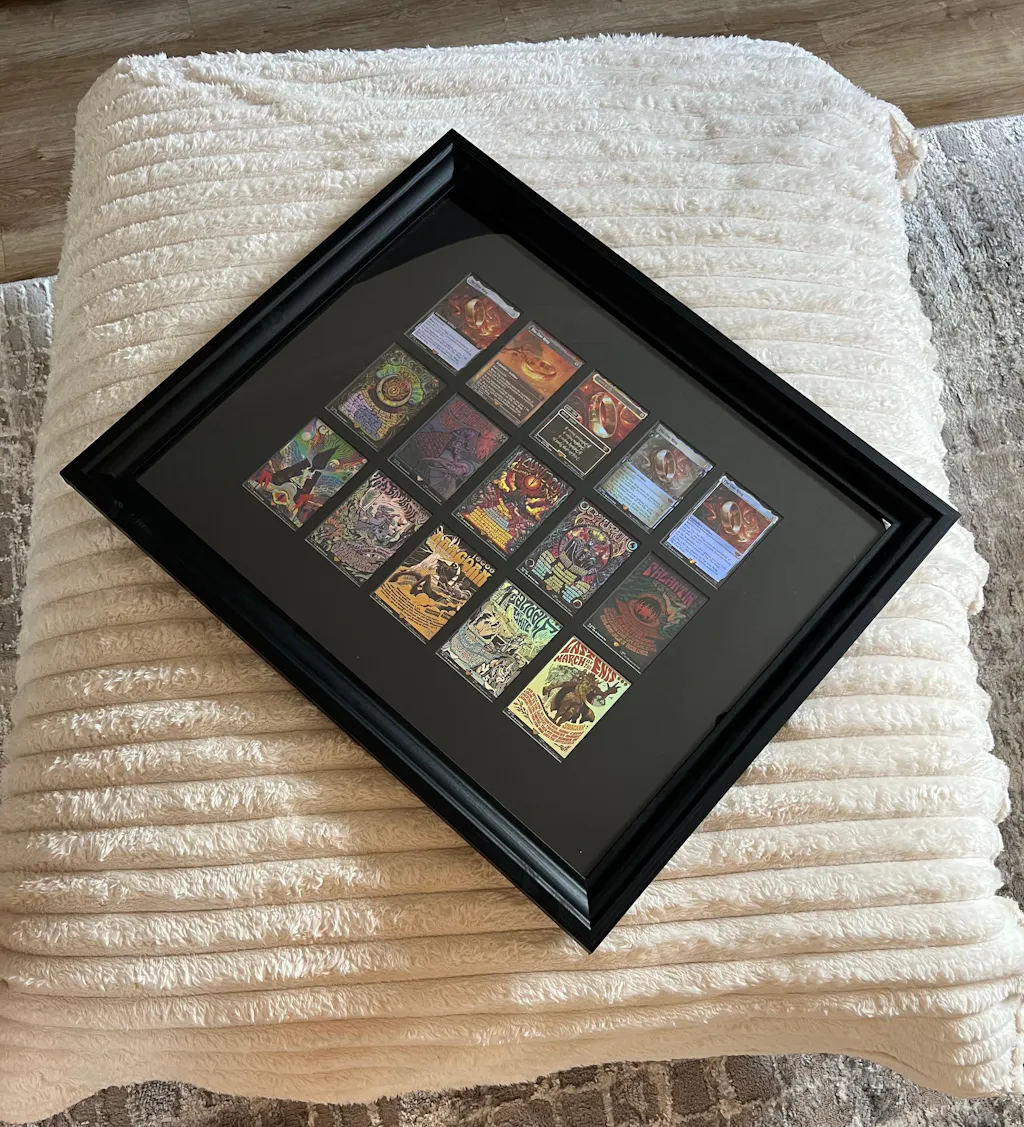
Larger layouts allow collectors to showcase more substantial collections.
These displays work particularly well when cards share a common theme.
Popular examples include:
- Complete subsets.
- Favourite Pokémon collections.
- Rookie card collections.
- Team collections.
- Championship collections.
A larger layout can transform a collection into a genuine feature piece.
Best For
- Collector rooms.
- Dedicated display walls.
- Growing collections.
Complete Collection Displays
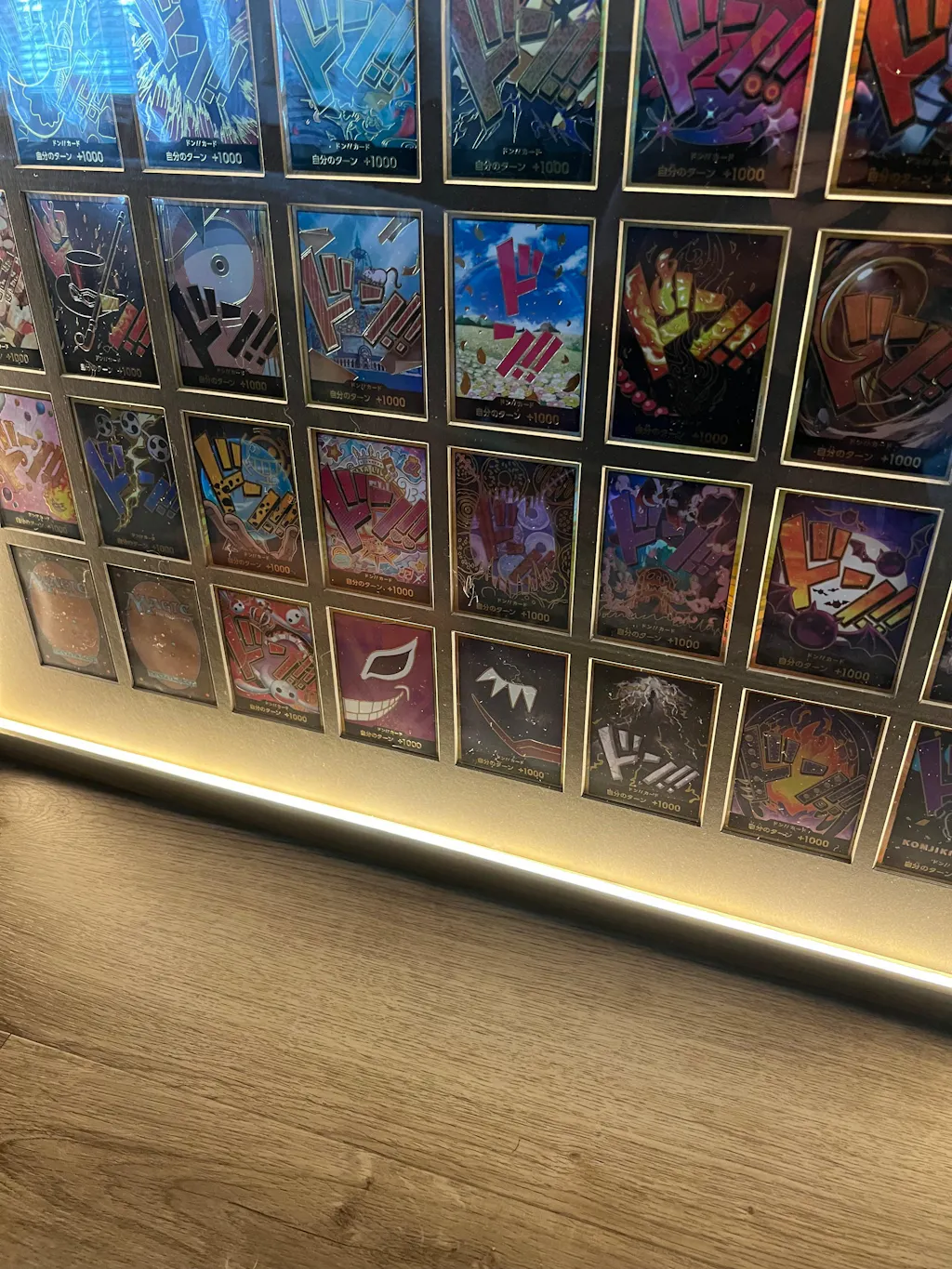
Some collectors prefer to display entire sets or major collection highlights.
This approach works especially well for:
- Vintage collections.
- Master set highlights.
- Graded collections.
- Character collections.
- Sports memorabilia displays.
Complete collection displays often become the focal point of a room.
Quality vs Quantity
One of the biggest mistakes collectors make is trying to display too many cards at once.
A display should feel intentional.
Sometimes displaying:
- 4 favourite cards
creates more impact than displaying:
- 20 random cards.
The strongest displays often focus on quality, theme and presentation rather than simply fitting as many cards as possible into a frame.
Creating a Story
The best displays tell a story.
Examples include:
Pokémon Journey
Display favourite cards collected over the years.
Team History
Showcase players from different eras of a favourite team.
Evolution Display
Highlight different versions or generations of a favourite character.
Personal Collection Highlights
Display the cards that hold the most meaning regardless of value.
Story-driven displays often feel more memorable than purely value-based displays.
Planning for Future Growth
Many collections continue to grow over time.
When choosing a display layout, it may be worth considering:
- Future card additions.
- Collection expansion.
- New grading submissions.
- Additional display walls.
A layout that allows room for growth can help the display evolve alongside the collection.
Matching the Display to the Space
The ideal display size also depends on the room.
Consider:
- Wall size.
- Viewing distance.
- Room lighting.
- Existing décor.
A large display can dominate a room, while a smaller display may create a more subtle presentation.
Final Thoughts
There is no perfect number of cards to display in a frame.
The best layout depends on the collection, the available space and the story the collector wants to tell.
Whether displaying a single showcase card, a nine-card graded collection or a large feature wall, thoughtful presentation can dramatically improve how a collection looks and feels.
Ultimately, the most successful displays are the ones that allow collectors to enjoy their favourite cards every day while showcasing the pieces that matter most to them.

0 comments